Describes
Standing with a Belt Cane
Walking with a Belt Cane
Jumping with a Belt Cane
Kicking with a Belt Cane
Running, Galloping, Skipping with a Belt Cane
Little kids do a lot of transitioning up and down. These lessons focus on how to integrate Belt Cane balance and feedback into these important transition activities that ultimately lead to confident standing up and walking.
Infants born without motor impairments can be expected to take their first wobbly, hands free step any time after age eight months and before they reach eighteen months. When provided with the proper assistive mobility devices and instruction, infants with a mobility visual impairment or blindness (MVI/B) can learn to let go of stable supports (furniture, handheld) and use extended touch feedback to let go and stand quietly and take their first steps.
The amount of independent walking time and walking ability can improve when they engage in their daily physical activity with enhanced balance through the Belt Cane.
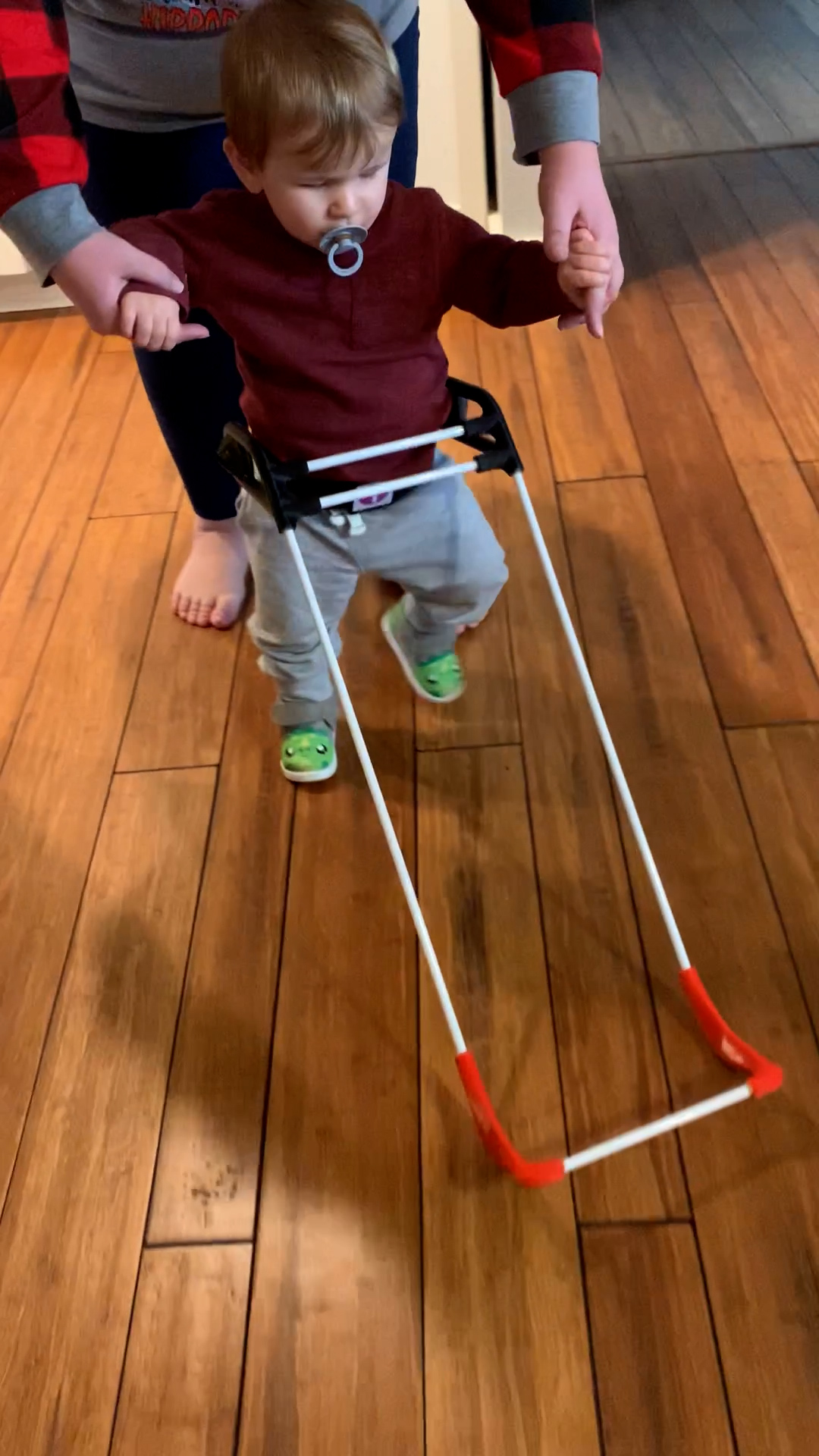
Toddlers with an MVI/B with consistent, daily access to enhanced Belt Cane balanced walking demonstrate a narrow base of support, clear stance and swing phase gait with inter- and intralimb coordination.
Unless otherwise recommended by their doctor, by eighteen months, infants with an MVI/B wearing the Belt Cane can be expected to walk solo during their age-appropriate five to six hours of daily physical activity.
When working on the skills of walking with a child with an MVI/B, provide the child with a Pediatric Belt Cane to ensure the child has sufficient touch feedback to independently balance, detect obstacles and alter their speed an direction in response to the environment. These are the walking abilities necessary to build confidence and motivation to move. Encourage balanced and safer walking in the child's daily routines, gradually reducing physical support.
All children with an MVI/B need extended touch feedback to walk their best. For children who use walkers for balance, it remains critical that the entire team determine the best way to ensure the child with an MVI/B has the necessary tactile feedback about the upcoming walking surface for the child to gain the confidence to move forward.